PRP vs. Cortisone for Shoulder Pain: How They Compare
Shoulder pain from rotator cuff tears, tendinitis, bursitis, or osteoarthritis disrupts millions of lives annually, limiting everything from simple reaches to active pursuits like surfing in San Diego. If nagging discomfort keeps you sidelined, you are probably weighing two options you have heard about: a cortisone shot, or a PRP injection.
They are different tools, and they are not interchangeable. This guide covers how each one works, what the research actually shows when they are compared head to head, what each costs, and which situations suit which.
What Is PRP for Shoulder Pain and How Does It Work?
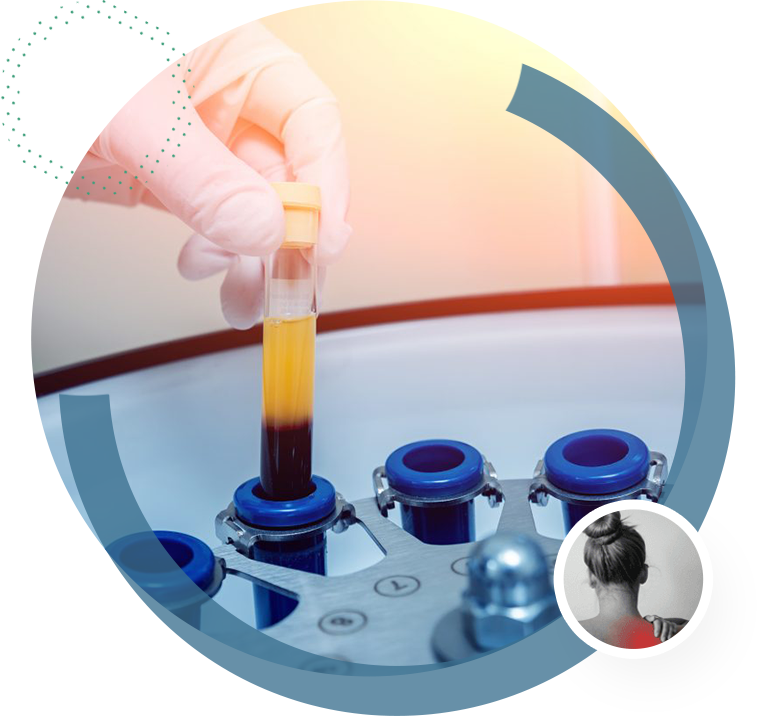
PRP injections for shoulder pain are made from your own blood. A small sample is drawn, spun in a centrifuge to concentrate the platelets and the growth factors they carry, and injected into the injured area — a partial rotator cuff tear, for example — under live ultrasound guidance.
The premise under study is that concentrating those signaling proteins and delivering them to tissue with a poor blood supply may influence the local healing environment. That is a different approach from a corticosteroid, which is a pharmaceutical anti-inflammatory.
One thing to know up front: the FDA currently considers most orthopedic applications of PRP investigational, and the research is mixed. As a result, PRP is a self-pay procedure, while cortisone injections are typically covered by insurance. We cover that in detail in our guide to what insurance does and does not cover for shoulder PRP.
The procedure takes about 60 minutes in an outpatient setting at our La Mesa office. Patients often resume light activities the same day, with initial soreness typically fading within a few days.
How Long Does PRP Take to Work for Shoulder Pain?
PRP is not expected to produce the rapid relief a cortisone shot can. The premise under study is a gradual biological response over weeks rather than days. Patients who respond often describe improvement beginning in the first several weeks, with any further change developing over the following months. Response varies by patient and by condition, and no timeline can be promised.
The Pros of PRP Injections for Shoulder Conditions
- It uses your own tissue. PRP is autologous, so the risks associated with introducing a foreign substance — allergic reaction, immune response — do not apply the way they would with a drug.
- It does not carry the tendon concerns that come with repeated steroid use. This is discussed below, and it is the clearest practical difference between the two.
- It does not rule anything out. If PRP does not get you where you need to be, surgical repair remains fully available.
- Low risk profile. The risks are those common to any injection — soreness at the site, bruising, a temporary increase in pain, and uncommonly infection or nerve or vessel irritation. Ultrasound guidance reduces several of these by letting the needle path be visualized rather than estimated.
What PRP has not been shown to do is reliably shrink a tear or rebuild tendon tissue. Research on structural outcomes remains mixed, and any clinic promising tissue regeneration is describing a hope rather than a demonstrated result.
Addressing Common PRP Concerns: Does PRP Hurt and How Many Sessions?
The blood draw is comparable to routine lab work. For the injection itself, the skin is anesthetized first, and most patients describe pressure rather than sharp pain. Post-injection soreness in the treated shoulder is expected and is considered part of the normal response.
Whether a single injection or a short series is appropriate depends on the structure being treated and your response, and that is determined at your evaluation rather than decided in advance.
One instruction matters more than the others: anti-inflammatory medications are typically restricted around the procedure, because NSAIDs act against the inflammatory cascade the injection is intended to work through.
What Corticosteroid Shots Do — and What They Don’t
Cortisone injections are a legitimate and useful tool, and I use them. They suppress the local inflammatory response and can produce meaningful pain relief within days — considerably faster than anything PRP offers. For an acute flare, for a patient who needs to get through a specific event, or as a diagnostic aid, a cortisone injection is often the right call.
What they do not do is act on the underlying tissue. The relief is symptomatic, and it fades.
The Limits of Cortisone for Shoulder Problems
- The effect is temporary. Relief is typically measured in weeks to a few months, after which symptoms commonly return if the underlying problem has not changed.
- Repeated injections raise concerns about tendon integrity. The 2025 American Academy of Orthopaedic Surgeons clinical practice guideline on rotator cuff management states, on the basis of strong evidence, that repeated corticosteroid injection may compromise rotator cuff integrity. That is the single most important thing to understand about relying on them long term.
- Systemic effects. Corticosteroids can raise blood sugar, which matters for patients with diabetes, and carry other systemic considerations worth discussing with your physician.
- Frequency limits. Most guidance limits how often these can reasonably be repeated in the same joint, for the reasons above.
None of this makes cortisone a bad treatment. It makes it a short-term treatment, and the problem arises when it becomes the long-term plan by default.
PRP vs. Corticosteroid: A Clear Comparison for Shoulder Pain Relief
A 2025 systematic review and meta-analysis in Orthopedic Reviews compared the two directly across 15 randomized controlled trials in rotator cuff injury. The findings were nuanced rather than one-sided:
- Pain: PRP showed an advantage at three to six weeks, but no significant difference overall between the two at later time points.
- Function: PRP showed better functional improvement at longer follow-up, with a significant difference on one standard functional measure at 24 weeks.
- Important caveat: the authors noted high heterogeneity between studies, called for cost-effectiveness data, and reported that roughly half the included trials carried a high risk of bias.
Read plainly: the evidence suggests a possible functional advantage for PRP over a longer horizon, with meaningful uncertainty attached. It does not support claiming one is simply better than the other.
PRP and cortisone at a glance
| Feature | PRP Injections for Shoulder | Corticosteroid Shots |
|---|---|---|
| Onset | Gradual — weeks | Rapid — days |
| How it works | Autologous concentrate studied for its effect on the healing environment | Pharmaceutical anti-inflammatory; suppresses the inflammatory response |
| Duration of effect | Varies; functional benefit reported at 24 weeks in comparative studies | Weeks to a few months |
| Risks | Injection-site soreness, bruising, temporary pain increase; infection uncommon | Repeated use may compromise tendon integrity (AAOS 2025, strong evidence); systemic effects |
| Repeat use | No established tendon-integrity concern with repetition | Limited by frequency guidance |
| Often suited to | Partial rotator cuff tears, tendinopathy, early arthritis | Acute flares, short-term relief, diagnostic use |
| FDA status | Investigational for orthopedic use | Established treatment |
| Insurance | Not covered — self-pay | Typically covered |
Neither one is the answer for every shoulder. The question is which fits your particular problem, and that depends on the diagnosis.
Does PRP Work for Shoulder Arthritis? Final Insights
For mild-to-moderate glenohumeral osteoarthritis, PRP is being studied as a way to modulate joint inflammation and manage symptoms. Whether it changes the long-term course of the disease has not been established, and it is not a substitute for shoulder replacement in advanced bone-on-bone arthritis.
Partial rotator cuff tears are where this comparison comes up most often, and the right answer there depends on how much of the tendon is involved — here is how that decision gets made.
Whichever direction your shoulder points, the part that matters most comes first: an accurate diagnosis. I review MRI images myself, perform every injection under live ultrasound guidance, and will tell you plainly when an injection is not the right answer for your injury.
Schedule an evaluation
You do not need an MRI, a diagnosis, or a referral to be seen. If your shoulder hurts and you want to know why, that is enough.
Call (619) 462-3131 or request an evaluation. Our office is in La Mesa, and we see patients from across San Diego County.
Sources
- Alshahir N, et al. Comparative Efficacy of Platelet-Rich Plasma and Corticosteroid Injections for Rotator Cuff Injury Management: A Systematic Review and Meta-Analysis. Orthopedic Reviews, 2025.
- American Academy of Orthopaedic Surgeons. Management of Rotator Cuff Injuries: Evidence-Based Clinical Practice Guideline, 2025.
- Rosso C, et al. The role of platelet-rich plasma in shoulder pathologies: a critical review of the literature. EFORT Open Reviews, 2023.
- U.S. Food and Drug Administration. Regulatory Considerations for Human Cells, Tissues, and Cellular and Tissue-Based Products.

This article is intended for general educational and informational purposes only and should not be considered medical advice. Reading this content does not create a physician-patient relationship. Always consult a qualified healthcare professional regarding your specific medical concerns, diagnosis, or treatment options.