PRP During Rotator Cuff Repair Surgery: What the Research Shows
The short answer
Adding PRP at the time of arthroscopic rotator cuff repair has been associated with lower retear rates — the tendon pulling away from the bone again — across several meta-analyses. Whether that translates into patients feeling better is less clear, and the research there is mixed. It is an active area of study and a reasonable thing to ask your surgeon about when you are planning a repair.
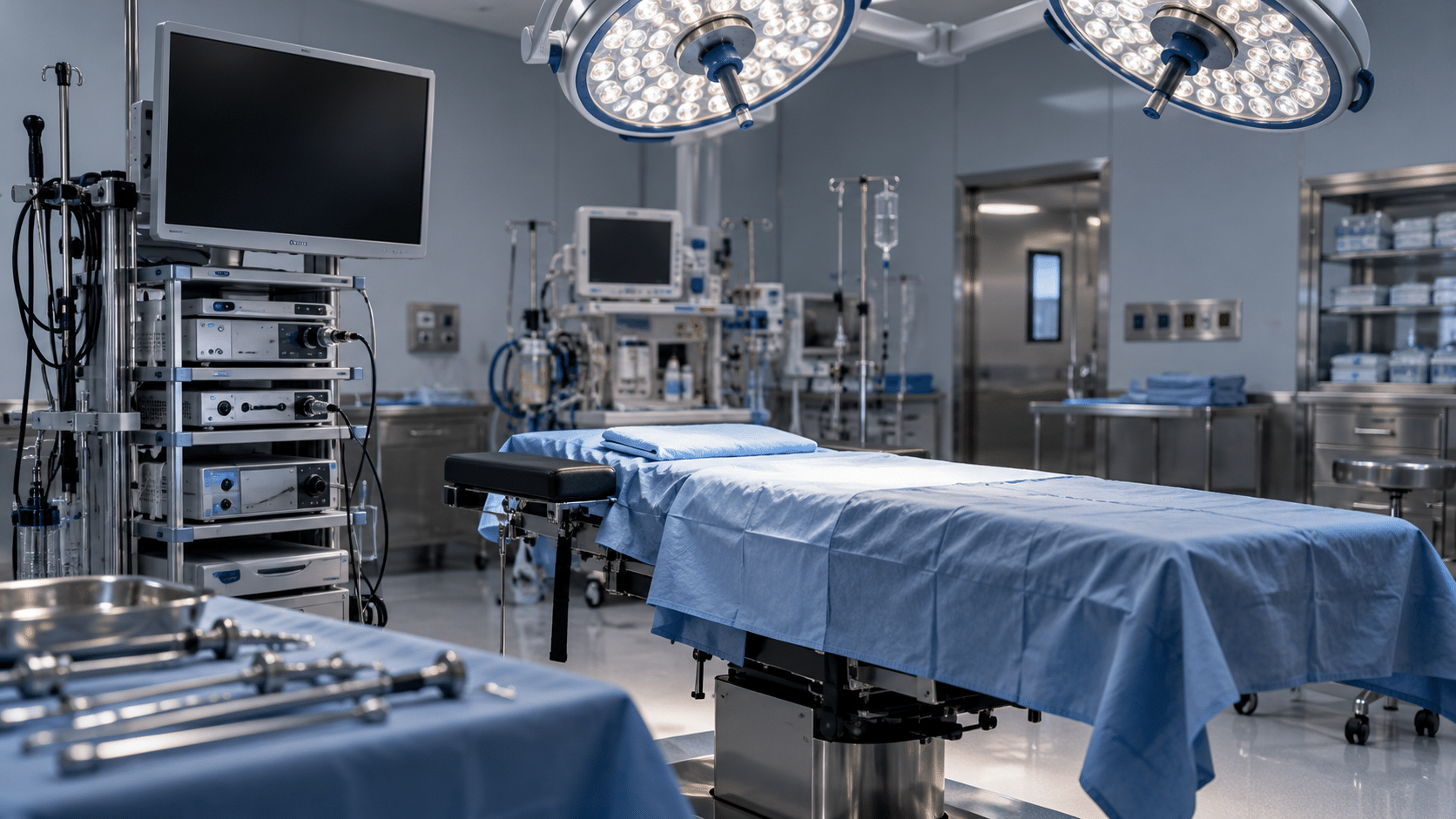
Most articles about PRP and the shoulder are about injections in the office. This one is about something different: using PRP inside the operating room, at the moment a torn rotator cuff is being reattached to bone.
Patients ask about it more often than they used to. It is a legitimately active area of research, and the evidence is interesting enough to be worth laying out plainly.
Why add PRP to a repair at all?
Rotator cuff repair is mechanically reliable. Modern suture constructs can hold loads well beyond what the tendon experiences in normal use. The problem is not usually that the stitches fail.
The challenge is biological. The rotator cuff tendons have a famously poor blood supply where they attach to bone, and that attachment site — the tendon-bone interface — has to regenerate rather than simply knit together. Retear rates after repair remain meaningfully high, particularly with larger tears and in older patients, and those failures are generally failures of healing rather than failures of fixation.
That is the rationale for biologic augmentation. The construct is sound, so the question becomes whether the healing environment can be improved.
The retear data
This is the most consistent finding in the literature.
A 2021 meta-analysis in Arthroscopy pooling 17 studies found a retear rate of 19.3% in PRP-augmented repairs compared with 25.4% in repairs without it. Broken out by formulation, pure PRP — the preparation with white blood cells largely removed — showed the strongest effect.
A 2026 meta-analysis restricted to Level I randomized controlled trials found biologic augmentation reduced retear rates by roughly 12 percentage points.
A separate European meta-analysis reached a similar conclusion, reporting a significantly lower retear rate with augmentation.
Several independent analyses, different research groups, same direction. For a field where findings often conflict, that consistency is worth something.
What is less settled
The same studies that found lower retear rates generally did not find clinically meaningful differences in pain scores or function scores at follow-up.
A 2026 meta-analysis of 13 randomized trials covering 880 patients concluded that PRP appears to improve early functional recovery and pain control in the weeks after surgery, while finding its effect on structural healing unproven in their particular analysis — close to the opposite emphasis of the studies above.
The American Academy of Orthopaedic Surgeons addressed this in its 2025 clinical practice guideline on rotator cuff management. Weighing patient-reported outcomes as the primary measure, the guideline does not recommend platelet products for routine augmentation, while noting that limited evidence supports liquid PRP in the context of reducing retear rates.
So the field is not of one mind, and reasonable surgeons read this evidence differently depending on how much weight they place on imaging findings versus patient-reported scores.
Patient Takeaway: A lower retear rate on MRI and a better-feeling shoulder are related but not identical. The retear signal is reasonably consistent; the patient-outcome benefit has been harder to demonstrate.
Where it is placed appears to matter
One of the more interesting threads here has less to do with whether PRP works and more with how it is delivered.
Subgroup analyses have repeatedly favored:
- Solid PRP matrix or fibrin preparations over liquid PRP. A liquid introduced into an arthroscopic field full of irrigation fluid is subject to washout. Material that stays where it is placed has a better chance of acting there.
- Placement at the tendon-bone interface rather than over the top of the repaired tendon.
- Smaller and medium-sized tears over large and massive tears.
- Double-row repair constructs over single-row.
One study using a technique that shuttled a concentrated PRP globule with fibrin matrix along a suture — specifically to keep the material at the repair site — reported a significant reduction in retears at nearly three years of follow-up.
That pattern suggests something worth noting: some of the inconsistency across studies may reflect that “PRP during rotator cuff repair” describes a number of different procedures sharing a single name. Preparation, volume, placement, and timing all vary between trials.
What this means if you are facing a repair
A few things are worth keeping in perspective.
This is a decision within an operation, not a reason to have one. Biologic augmentation is something considered during a rotator cuff repair you already need. If you are still weighing whether surgery is necessary at all, that is a different question — and for a partial tear, the decision works differently.
Retear risk depends on much more than biologics. Tear size, tendon quality, muscle atrophy, smoking, diabetes, age, and how closely you follow the rehabilitation protocol all carry more weight than anything added at the time of surgery.
It is a fair thing to ask about. If you are scheduled for a rotator cuff repair and you have read about PRP augmentation, ask your surgeon what they do and what they think of the evidence. There are defensible positions here, and the conversation is a reasonable one to have.
Schedule an evaluation
You do not need an MRI, a diagnosis, or a referral to be seen. If your shoulder hurts and you want to know why, that is enough.
Call (619) 462-3131 or request an evaluation. Our office is in La Mesa, and we see patients from across San Diego County.
Sources
- Biologic Augmentation Improves Rotator Cuff Integrity But Not Clinically Significant Patient Outcomes: A Meta-Analysis of Randomized Controlled Trials. 2026.
- Platelet-Rich Product Supplementation in Rotator Cuff Repair Reduces Retear Rates and Improves Clinical Outcomes: A Meta-analysis of Randomized Controlled Trials. Arthroscopy, 2021.
- Platelet-rich plasma in arthroscopic rotator cuff repair: a meta-analysis of biomaterial efficacy. Frontiers in Bioengineering and Biotechnology, 2026.
- American Academy of Orthopaedic Surgeons. Management of Rotator Cuff Injuries: Evidence-Based Clinical Practice Guideline, 2025.
- Evidence for Utilization of Injectable Biologic Augmentation in Primary Rotator Cuff Repair: A Systematic Review of Data From 2010 to 2022.

This article is intended for general educational and informational purposes only and should not be considered medical advice. Reading this content does not create a physician-patient relationship. Always consult a qualified healthcare professional regarding your specific medical concerns, diagnosis, or treatment options.