Recovering from Rotator Cuff Surgery: Why Integrated PT & Laser Therapy Matter
Quick Answer
Recovery from rotator cuff surgery depends just as much on rehabilitation as the procedure itself. Patients who follow a structured physical therapy plan, especially one coordinated closely with their surgeon, tend to regain strength, mobility, and function more safely and efficiently. Integrated care, including coordinated physical therapy and advanced treatments like Class IV laser therapy, can reduce pain, improve healing, and support a smoother recovery.
Introduction: Surgery Is Only Half the Equation
A successful rotator cuff repair doesn’t end in the operating room.
In fact, most shoulder specialists agree: recovery is roughly 50% surgery and 50% rehabilitation.
For many patients, one of the biggest challenges is navigating a fragmented recovery process, where the surgeon, physical therapist, and pain management strategies are all disconnected.
Dr. Ben DuBois takes a different approach.
His philosophy is simple: recovery should be coordinated, personalized, and integrated, not pieced together.
The Crucial Role of Physical Therapy After Rotator Cuff Surgery
Physical therapy is what transforms a technically successful surgery into a fully functional shoulder.
The Two Key Phases of Recovery
1. Protection Phase (Early Weeks)
- Focus: Protect the repaired tendon
- Sling use is required
- Passive motion only, guided by a therapist
- Avoid stressing the repair
2. Mobilization & Strengthening Phase
- Gradual return of active movement
- Controlled strengthening exercises
- Focus on restoring range of motion and stability
This progression must be carefully timed. Moving too fast can damage the repair, while moving too slowly can lead to stiffness or complications like frozen shoulder.
Why Shoulder-Specific PT Matters
Not all physical therapy is the same.
Post-operative shoulder rehab requires:
- Precise, low-load movements
- A deep understanding of tendon healing timelines
- Ongoing adjustments based on patient progress
That’s why working with therapists experienced in shoulder recovery can make a meaningful difference in outcomes.
Coordinated Care: In-House Physical Therapy Just Upstairs
One of the biggest advantages for patients recovering with Dr. Ben DuBois, a top-rated San Diego Orthopedic Shoulder Surgeon, is access to dedicated physical therapy located just one floor above his office in Suite 360.
What Makes This Setup Different?
- Four experienced physical therapists focused on post-surgical shoulder recovery
- Close proximity to Dr. DuBois’s clinic for easy coordination
- A more connected, streamlined recovery experience
Why This Matters for Your Recovery
In many cases, patients are referred to an outside therapy clinic where communication between providers can be limited.
Here, your care team works in close alignment.
That means your therapy program can be guided by:
- What Dr. DuBois observed during your surgery
- The size and severity of your rotator cuff tear
- How your shoulder is progressing week by week
This level of coordination helps ensure your recovery stays on track, safe, and tailored specifically to you.
It’s also especially valuable for patients looking for shoulder physical therapy in San Diego after surgery.
Supercharging Healing: Class IV Laser Therapy
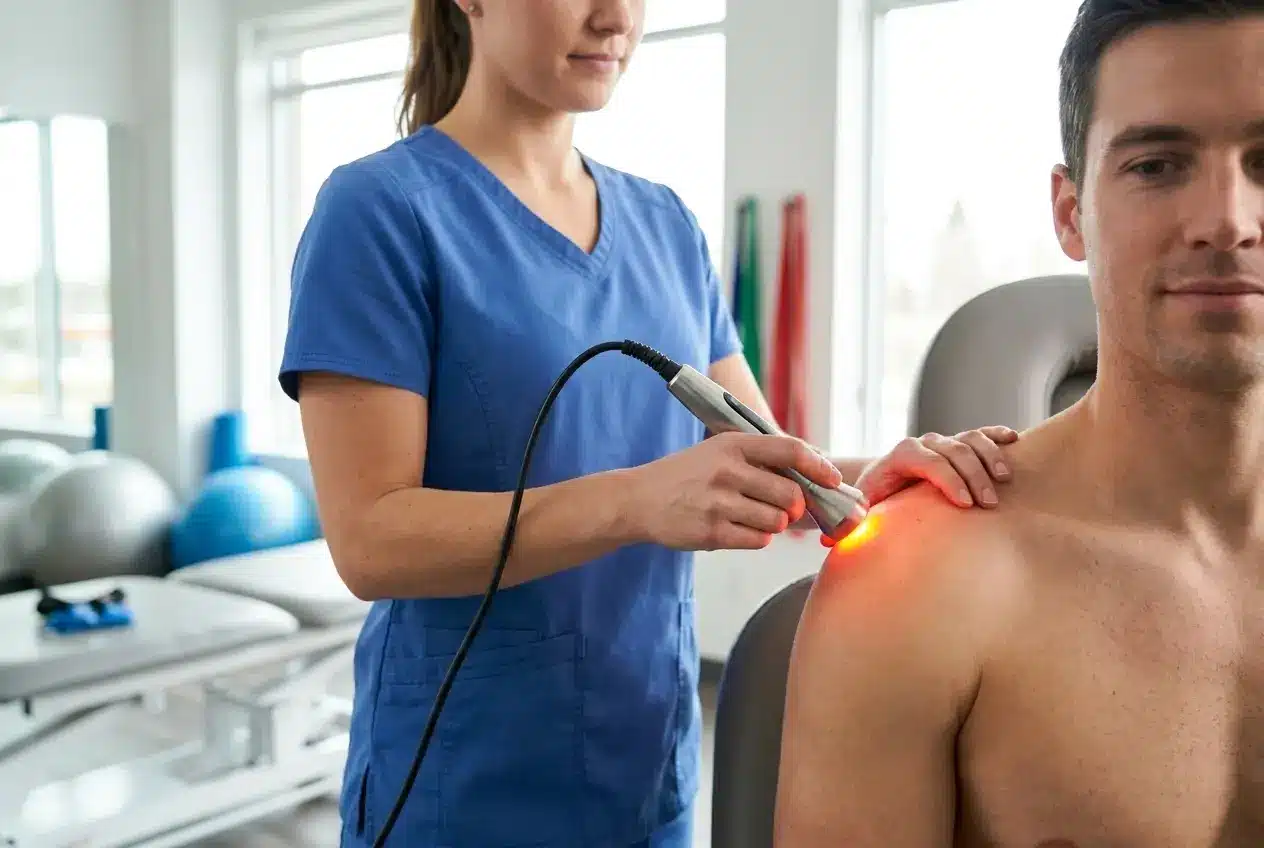
 In addition to hands-on therapy, patients completing physical therapy just upstairs have access to advanced recovery technology, most notably Class IV laser therapy.
What Is Class IV Laser Therapy?
Class IV laser therapy is a high-intensity, non-invasive treatment that uses light energy to stimulate healing at the cellular level.
It works through a process called photobiomodulation.
How It Helps After Rotator Cuff Surgery
This therapy can:
- Reduce inflammation in the shoulder
- Improve blood flow to healing tissues
- Support faster tendon repair
- Decrease post-surgical pain
Why Patients Benefit
For many patients, this becomes a valuable part of recovery because it:
- Helps manage pain without over-reliance on medication
- Supports the biological healing process
- May allow for more comfortable progression through therapy
In a recovery process that can take several months, even small improvements in healing and comfort can make a big difference.
The “All-in-One” Recovery Advantage
When surgery, therapy, and advanced recovery tools are all conveniently located in one place, patients benefit from:
- Better communication between providers
- Faster adjustments to treatment plans
- A more personalized recovery experience
- Greater confidence throughout the healing process
Instead of guessing whether you’re progressing correctly, you’re guided every step of the way.
Start Your Recovery the Right Way
If you’re considering rotator cuff surgery or preparing for recovery, the structure of your rehabilitation plan matters just as much as the procedure itself.
To learn more about surgical options and what to expect, visit Dr. DuBois’s page on rotator cuff repair surgery in San Diego.
Or schedule a consultation with Dr. Ben DuBois to discuss a recovery plan tailored specifically to you.
Frequently Asked Questions
How long does it take to recover from rotator cuff surgery?
Most patients take about 4–6 months to regain function, although full healing can take up to a year depending on the severity of the tear and consistency with therapy.
When should physical therapy start after surgery?
Physical therapy often begins shortly after surgery, typically within the first week, starting with gentle passive movements.
Is laser therapy safe after shoulder surgery?
Yes. Class IV laser therapy is non-invasive and commonly used to reduce inflammation and support healing after orthopedic procedures.
Can poor rehabilitation affect surgical results?
Yes. Inadequate or poorly timed rehabilitation can lead to stiffness, weakness, or even compromise the surgical repair.